Scottish Brain Sciences is delighted to announce that Dr Lewis Penny has joined our organisation as Director of Laboratory Sciences. Lewis steps into the role held by the esteemed Dr Alison Green, who is retiring after years of exceptional service.
Lewis brings over a decade of experience in drug discovery, development and translational science, with deep expertise in biomarker approaches for neurodegenerative disease. His career has spanned roles in academia, biotechnology, pharma and consultancy, most recently working across multiple clients as a senior consultant in drug development before making the move to Scottish Brain Sciences.
Craig Ritchie, CEO of Scottish Brain Sciences, commented:
‘I am personally delighted that Lewis has joined the Senior Leadership Team here at Scottish Brain Sciences. Our biomarker and laboratory work is a fundamental part of our strategy to develop, validate and implement fluid biomarker tests for a range of neurodegenerative diseases.
“Early detection of disease is the most fundamental part of any treatment, and Lewis’ knowledge and experience will ensure we rapidly grow this arm of our business whilst maintaining the highest quality standards.
“He builds upon the phenomenal work undertaken by Dr Alison Green who has set such a robust foundation.”
Lewis will be based between the laboratory in St Andrews and the research site in Aberdeen where he is based. He shared his own excitement about joining Scottish Brain Sciences:
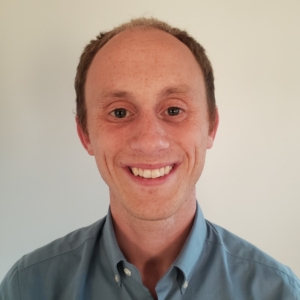
‘I’m absolutely delighted to be joining Scottish Brain Sciences on their important mission to drive forward early detection and treatment of brain conditions such as Alzheimer’s disease.
“Having now started in my role, I’ve been very impressed by the progress the Scottish Brain Sciences team have made in such a short space of time. I’m looking forward to continuing this progress in the months and years ahead and I am beyond thankful to Dr Alison Green and the team for the stellar work and progress to date.”
We look forward to the expertise, leadership, and energy Lewis will bring as we expand and accelerate our laboratory and biomarker programmes.
More news from Scottish Brain Sciences
 https://brainsciences.scot/wp-content/uploads/2023/08/Clara.png
300
300
k.montano
https://brainsciences.scot/wp-content/uploads/2025/11/SBS-web-logo5-1.png
k.montano2023-09-01 09:00:002025-04-25 11:22:08The SBS Blog – Welcome our new Senior Clinical Investigator!
https://brainsciences.scot/wp-content/uploads/2023/08/Clara.png
300
300
k.montano
https://brainsciences.scot/wp-content/uploads/2025/11/SBS-web-logo5-1.png
k.montano2023-09-01 09:00:002025-04-25 11:22:08The SBS Blog – Welcome our new Senior Clinical Investigator! © angellodeco
https://brainsciences.scot/wp-content/uploads/2023/08/Genomics-Image-©-angellodeco-.jpg
400
640
Denise Fraser
https://brainsciences.scot/wp-content/uploads/2025/11/SBS-web-logo5-1.png
Denise Fraser2023-08-16 10:55:002023-08-16 11:43:39Partnership seeks early Alzheimer’s blood test
© angellodeco
https://brainsciences.scot/wp-content/uploads/2023/08/Genomics-Image-©-angellodeco-.jpg
400
640
Denise Fraser
https://brainsciences.scot/wp-content/uploads/2025/11/SBS-web-logo5-1.png
Denise Fraser2023-08-16 10:55:002023-08-16 11:43:39Partnership seeks early Alzheimer’s blood test https://brainsciences.scot/wp-content/uploads/2023/08/Team-photos-for-website-300-×-300-px-300-×-300-px-300-×-300-px.png
300
300
k.montano
https://brainsciences.scot/wp-content/uploads/2025/11/SBS-web-logo5-1.png
k.montano2023-08-11 12:24:342025-03-14 13:32:21The SBS Blog – Welcome our new Research Officer to the CEO!
https://brainsciences.scot/wp-content/uploads/2023/08/Team-photos-for-website-300-×-300-px-300-×-300-px-300-×-300-px.png
300
300
k.montano
https://brainsciences.scot/wp-content/uploads/2025/11/SBS-web-logo5-1.png
k.montano2023-08-11 12:24:342025-03-14 13:32:21The SBS Blog – Welcome our new Research Officer to the CEO!