Scottish Brain Sciences has announced that its biomarker laboratory has achieved UKAS ISO 15189 accreditation, marking a major milestone in its mission to advance the early detection and diagnosis of Alzheimer’s disease.
The accreditation recognises the laboratory’s high standards in quality, technical competence and clinical reliability, providing partners with confidence in the robustness, traceability and scalability of its biomarker testing services.
This achievement strengthens Scottish Brain Sciences’ position as a trusted partner for pharmaceutical, biotech and academic organisations seeking high-quality biomarker data to support clinical trials, translational research and the development of new diagnostics.
Located at the Eden Campus in St Andrews, the state-of-the-art laboratory specialises in blood- and cerebrospinal fluid (CSF)-based assays designed to detect the earliest biological signs of Alzheimer’s disease. Its capabilities include advanced biomarker assays such as plasma and CSF pTau-181 and pTau-217, which are increasingly recognised as key indicators of Alzheimer’s pathology. 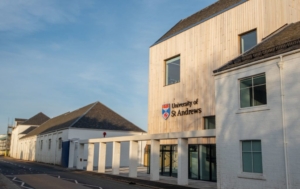
ISO 15189 accreditation now enables the laboratory to expand its capabilities further, supporting clinical and diagnostic services alongside its established portfolio of clinical trial studies—bridging the gap between research and real-world clinical application.
The accreditation process was led by Dr Alison Green, Head of Biomarker Division at Scottish Brain Sciences. She said:
“UKAS accreditation is a major achievement for such a newly established facility. It reflects the hard work and dedication not only of the laboratory team, but the wider Scottish Brain Sciences organisation, all of whom have contributed to this success. This accreditation enables us to expand our work to include clinical and diagnostic services, alongside our existing clinical trial portfolio.”
The laboratory services at Scottish Brain Sciences will be taken forward by Director of Laboratory Services, Lewis Penny, following Dr Alison Green’s retirement this year.
He said:
“Achieving UKAS ISO 15189 accreditation is a significant milestone for Scottish Brain Sciences and a testament to the team’s commitment to quality and scientific excellence. I’m grateful to Dr Alison Green and the team for establishing such a strong platform for success. At such an exciting time for our field, we look forward to building on this as we expand our CSF and blood-based biomarker capabilities and support earlier and more accurate diagnosis of neurodegenerative diseases.”
The laboratory is at the forefront of biomarker innovation, delivering validated assays and working with large, well-characterised cohorts to support the development of scalable, non-invasive approaches to Alzheimer’s detection.
By combining accredited laboratory processes with cutting-edge biomarker science, Scottish Brain Sciences is enabling partners to accelerate trial recruitment, improve diagnostic precision and support earlier intervention in neurodegenerative disease.
Get in touch to explore how we can support your biomarker strategy or clinical programme commercial@brainsciences.scot.
More news
 https://brainsciences.scot/wp-content/uploads/2023/08/Clara.png
300
300
k.montano
https://brainsciences.scot/wp-content/uploads/2025/11/SBS-web-logo5-1.png
k.montano2023-09-01 09:00:002025-04-25 11:22:08The SBS Blog – Welcome our new Senior Clinical Investigator!
https://brainsciences.scot/wp-content/uploads/2023/08/Clara.png
300
300
k.montano
https://brainsciences.scot/wp-content/uploads/2025/11/SBS-web-logo5-1.png
k.montano2023-09-01 09:00:002025-04-25 11:22:08The SBS Blog – Welcome our new Senior Clinical Investigator! © angellodeco
https://brainsciences.scot/wp-content/uploads/2023/08/Genomics-Image-©-angellodeco-.jpg
400
640
Denise Fraser
https://brainsciences.scot/wp-content/uploads/2025/11/SBS-web-logo5-1.png
Denise Fraser2023-08-16 10:55:002023-08-16 11:43:39Partnership seeks early Alzheimer’s blood test
© angellodeco
https://brainsciences.scot/wp-content/uploads/2023/08/Genomics-Image-©-angellodeco-.jpg
400
640
Denise Fraser
https://brainsciences.scot/wp-content/uploads/2025/11/SBS-web-logo5-1.png
Denise Fraser2023-08-16 10:55:002023-08-16 11:43:39Partnership seeks early Alzheimer’s blood test https://brainsciences.scot/wp-content/uploads/2023/08/Team-photos-for-website-300-×-300-px-300-×-300-px-300-×-300-px.png
300
300
k.montano
https://brainsciences.scot/wp-content/uploads/2025/11/SBS-web-logo5-1.png
k.montano2023-08-11 12:24:342025-03-14 13:32:21The SBS Blog – Welcome our new Research Officer to the CEO!
https://brainsciences.scot/wp-content/uploads/2023/08/Team-photos-for-website-300-×-300-px-300-×-300-px-300-×-300-px.png
300
300
k.montano
https://brainsciences.scot/wp-content/uploads/2025/11/SBS-web-logo5-1.png
k.montano2023-08-11 12:24:342025-03-14 13:32:21The SBS Blog – Welcome our new Research Officer to the CEO!