Scottish Brain Sciences is now a registered independent clinic with Healthcare Improvement Scotland (HIS).
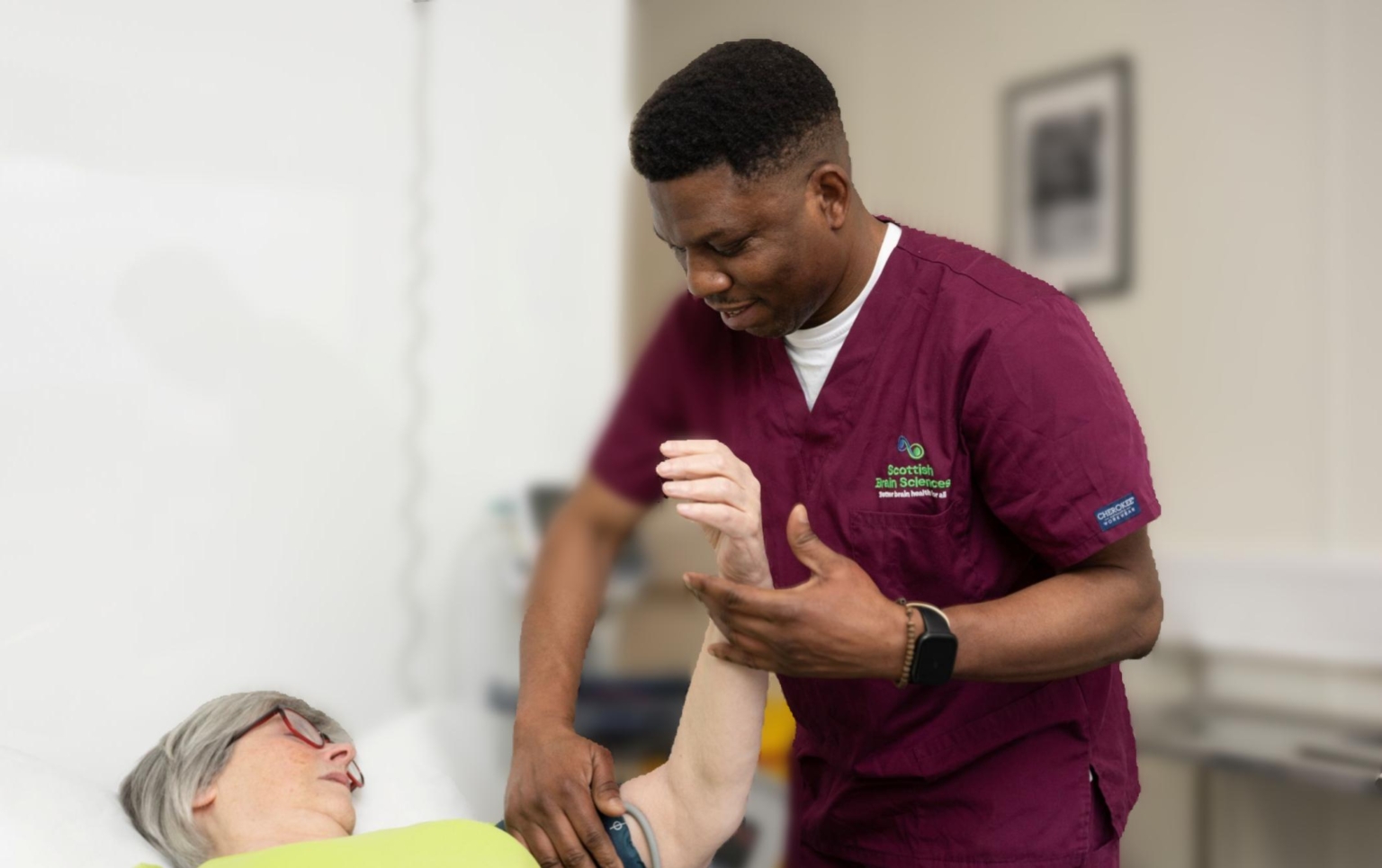
This marks a major milestone for Scottish Brain Sciences (SBS), and the people we support. We can now deliver a new clinical service for people at risk of or in the early stages of Alzheimer’s disease and other neurodegenerative conditions.
The HIS registration sits alongside the regulatory oversight of our clinical research by the UK Medicines and Healthcare products Regulatory Agency (MHRA) and review by the Health Research Authority’s Research Ethics Committees and other relevant bodies.
For SBS, and the people we serve, this is much more than a regulatory step. It is a significant move towards the model of independent brain health and neurodegenerative care that we believe is needed for the future.
For too long, research and clinical care in this field have operated on separate tracks. Science moves forward, diagnostics improve, treatments emerge — yet health systems often remain slow, fragmented and poorly configured to translate that progress into earlier diagnosis and meaningful support for patients.
We have been working to build something different. At Scottish Brain Sciences, our aim is to bring research and care together in a single setting — so that participation in research is not peripheral to clinical care, but part of how care is accessed, informed and improved. In practice, that means creating an independent healthcare model where assessment, diagnosis, monitoring and access to innovation can sit alongside one another, rather than being spread across disconnected pathways.
Earlier diagnosis is becoming critical in Alzheimer’s disease and related conditions. If we are serious about prevention, risk reduction, earlier intervention and the responsible adoption of emerging treatments, then we need care models that are faster, more integrated and much more responsive to scientific progress.
Registration as an independent clinic gives us the additional foundation needed to move forward with that vision from our Clinical Research Centre in Edinburgh. We will share more in due course as the service moves towards launch, but for now, we celebrate a significant step forward, towards a more integrated, more agile and more ambitious model of care for people at risk of neurodegenerative disease.
Prof Craig Ritchie, CEO and Founder of SBS and author of the Scottish Brain Health Model, said:
“This is a landmark day. We have been building to this moment for almost 4 years within SBS. We are now able to offer clinical services to people already enrolled in our IONA cohort study without external referral and often delays to third party providers.
When I worked in the NHS – a very small proportion of patients in memory clinics were offered access to clinical research. We have deliberately re-engineered this so that research participation is the doorway into clinical care. This new model of healthcare reflects the novelty and the needs of the Brain Health and Neurodegenerative Medicine discipline. It is scalable and sustainable and completely free for our research participants.”
More news
 https://brainsciences.scot/wp-content/uploads/2023/07/image.png
464
343
Denise Fraser
https://brainsciences.scot/wp-content/uploads/2025/11/SBS-web-logo5-1.png
Denise Fraser2023-07-11 15:40:002023-07-19 14:05:22Scotland hosts second world brain health summit
https://brainsciences.scot/wp-content/uploads/2023/07/image.png
464
343
Denise Fraser
https://brainsciences.scot/wp-content/uploads/2025/11/SBS-web-logo5-1.png
Denise Fraser2023-07-11 15:40:002023-07-19 14:05:22Scotland hosts second world brain health summit https://brainsciences.scot/wp-content/uploads/2023/07/Craig-at-San-Fran-reception-1.jpg
510
680
k.montano
https://brainsciences.scot/wp-content/uploads/2025/11/SBS-web-logo5-1.png
k.montano2023-07-10 15:00:352023-07-10 16:18:48The SBS Blog – June 2023 Recap
https://brainsciences.scot/wp-content/uploads/2023/07/Craig-at-San-Fran-reception-1.jpg
510
680
k.montano
https://brainsciences.scot/wp-content/uploads/2025/11/SBS-web-logo5-1.png
k.montano2023-07-10 15:00:352023-07-10 16:18:48The SBS Blog – June 2023 Recap Scottish Brain Sciences
https://brainsciences.scot/wp-content/uploads/2023/05/Craig-640x400-1.jpg
400
640
Denise Fraser
https://brainsciences.scot/wp-content/uploads/2025/11/SBS-web-logo5-1.png
Denise Fraser2023-06-06 16:06:182025-12-15 10:44:43A Strategy for Brain Health
Scottish Brain Sciences
https://brainsciences.scot/wp-content/uploads/2023/05/Craig-640x400-1.jpg
400
640
Denise Fraser
https://brainsciences.scot/wp-content/uploads/2025/11/SBS-web-logo5-1.png
Denise Fraser2023-06-06 16:06:182025-12-15 10:44:43A Strategy for Brain Health