Scottish Brain Sciences
  • Home
  • Taking part in research
    • Studies and trials
    • Patient and Public Involvement panel
  • Industry services and partnerships
    • Clinical trial services
    • Biomarker Diagnostics
    • IONA Gateway Data and Biobanking
  • Who we are
    • Leadership team
    • Careers
    • International Brain Health Conference 2026
    • News
      • Publications
  • Contact Us
    • Register interest form
  • Click to open the search input field Click to open the search input field Search
  • Menu Menu

Scottish patients first in Europe to join new Alzheimer’s trial focused on reducing distress

A new clinical trial offering hope to people living with Alzheimer’s disease and their families has opened in Scotland.

A woman is talking to a male nurse. They are sitting at a table opposite each other

The research aims to address one of the most challenging and least treated aspects of the condition: the changes in behaviour that can leave individuals feeling unsettled, anxious or agitated.

We are now recruiting at Scottish Brain Sciences research hubs in Aberdeen and Edinburgh. The first participant in Europe was screened earlier this month at the Aberdeen BioHub site, signalling strong demand for research into behavioural symptoms of Alzheimer’s disease—an area long recognised by clinicians and charities as underserved.

About the study
Many people with Alzheimer’s experience periods of heightened restlessness or emotional discomfort as the condition progresses. These moments can be deeply upsetting for the individual, and they often signal that the person is struggling to communicate an unmet need or feeling overwhelmed by their environment. Families frequently describe this as one of the most difficult parts of the journey, yet treatment options remain extremely limited.

The new SERENADA study will investigate whether a new investigational medication can help ease these symptoms and improve wellbeing for both patients and caregivers.

It focuses on finding safer, more effective ways to support people who experience these symptoms, which can make daily life harder for those living with Alzheimer’s and for their families and carers.
Participants will be supported closely by a clinical research team, with caregivers playing a key role in observing changes and offering insight into the person’s experience.

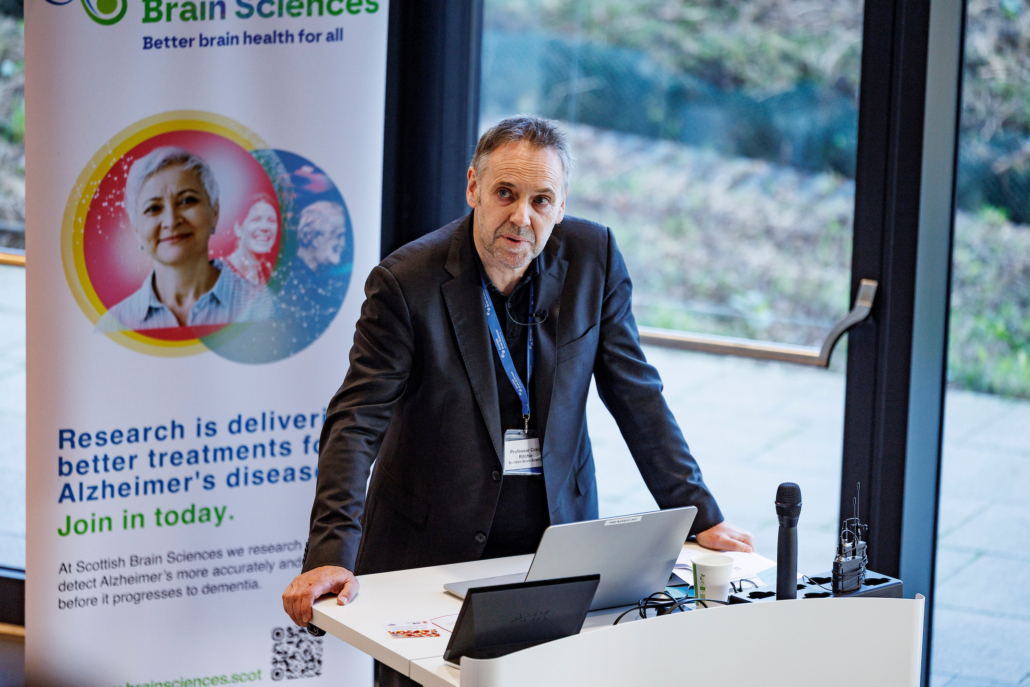
Professor Craig Ritchie, a leading dementia specialist and CEO of Scottish Brain Sciences, said: “Families tell us that these behavioural changes can be among the most challenging and heartbreaking aspects of Alzheimer’s. They often reflect distress that the person themselves may not be able to express”.

“There is a clear need for better, more effective ways to support people through these moments.  We are proud to be contributing to global efforts to improve care and quality of life for people living with Alzheimer’s disease, and this study is an important step toward that goal.”
The SERENADA study, developed by Exciva GmbH, will assess the safety and efficacy of the investigational medication. Participants will attend clinic visits over approximately 14 weeks, including screening, treatment and follow-up.

Recruitment is now open at Scottish Brain Sciences’ research clinics in Aberdeen and Edinburgh, currently the only UK sites involved in the global study.

Families or individuals experiencing these symptoms linked to Alzheimer’s disease who wish to learn more about taking part in research can visit the Scottish Brain Sciences website or contact the team directly.
  • Email participation@brainsciences.scot
  • Learn more about the study https://brainsciences.scot/alzheimers-behavioural-symptoms-study/

More News

Male nurse checking blood pressure of female patient who is lying on a bed

Building a new model for earlier Alzheimer’s diagnosis and care

15th June 2026
A new clinical service for people at risk of or in the early stages of Alzheimer’s disease and other neurodegenerative conditions.  
Read more
https://brainsciences.scot/wp-content/uploads/2026/06/ScottishBrainSciences_010.jpg 1339 2132 Denise Fraser https://brainsciences.scot/wp-content/uploads/2025/11/SBS-web-logo5-1.png Denise Fraser2026-06-15 12:53:082026-06-15 12:53:27Building a new model for earlier Alzheimer’s diagnosis and care
A woman is talking to a male nurse. They are sitting at a table opposite each other

Scottish patients first in Europe to join new Alzheimer’s trial focused on reducing distress

11th June 2026
Study is open for recruitment in Aberdeen and Edinburgh. Learn more
Read more
https://brainsciences.scot/wp-content/uploads/2025/12/ScottishBrainSciences_017-scaled.jpg 1682 2560 Denise Fraser https://brainsciences.scot/wp-content/uploads/2025/11/SBS-web-logo5-1.png Denise Fraser2026-06-11 14:10:482026-06-11 14:19:42Scottish patients first in Europe to join new Alzheimer’s trial focused on reducing distress
Man smiling

Introducing Gary White as Director of Operations

4th June 2026
Life sciences expert Gary White appointed as Director of Operations at Scottish Brain Sciences to support company growth.
Read more
https://brainsciences.scot/wp-content/uploads/2026/06/Gary-White-copy-June2026.jpg 1664 2080 Denise Fraser https://brainsciences.scot/wp-content/uploads/2025/11/SBS-web-logo5-1.png Denise Fraser2026-06-04 10:32:482026-06-04 10:41:59Introducing Gary White as Director of Operations
Page 1 of 17123›»

Categories

  • Brain health
  • Brain injury
  • News
  • People
  • Policy
  • Research news
  • Scottish Brain Sciences
  • Sport
  • Uncategorised
  • Webinar

Keep in touch

  • Follow Scottish Brain Sciences on Facebook Follow Scottish Brain Sciences on LinkedIn Follow Scottish Brain Sciences on Instagram Follow Scottish Brain Sciences on YouTube

News and research

  • Latest News

Contact us

  • Contact form
Link to: Introducing Gary White as Director of Operations Link to: Introducing Gary White as Director of Operations Introducing Gary White as Director of OperationsMan smiling Link to: Building a new model for earlier Alzheimer’s diagnosis and care Link to: Building a new model for earlier Alzheimer’s diagnosis and care Male nurse checking blood pressure of female patient who is lying on a bedBuilding a new model for earlier Alzheimer’s diagnosis and care
Scroll to top Scroll to top Scroll to top

We use Google Analytics. By continuing to browse the site, you are agreeing to our use of cookies.

OKHide notificationLearn more

Cookie and Privacy Settings


How we use cookies

We may request cookies to be set on your device. We use cookies to let us know when you visit our websites, how you interact with us, to enrich your user experience, and to customize your relationship with our website.

Click on the different category headings to find out more. You can also change some of your preferences. Note that blocking some types of cookies may impact your experience on our websites and the services we are able to offer.

Essential Website Cookies

These cookies are strictly necessary to provide you with services available through our website and to use some of its features.

Because these cookies are strictly necessary to deliver the website, refusing them will have impact how our site functions. You always can block or delete cookies by changing your browser settings and force blocking all cookies on this website. But this will always prompt you to accept/refuse cookies when revisiting our site.

We fully respect if you want to refuse cookies but to avoid asking you again and again kindly allow us to store a cookie for that. You are free to opt out any time or opt in for other cookies to get a better experience. If you refuse cookies we will remove all set cookies in our domain.

We provide you with a list of stored cookies on your computer in our domain so you can check what we stored. Due to security reasons we are not able to show or modify cookies from other domains. You can check these in your browser security settings.

Other external services

We also use different external services like Google Webfonts, Google Maps, and external Video providers. Since these providers may collect personal data like your IP address we allow you to block them here. Please be aware that this might heavily reduce the functionality and appearance of our site. Changes will take effect once you reload the page.

Google Webfont Settings:

Google Map Settings:

Google reCaptcha Settings:

Vimeo and Youtube video embeds:

Privacy Policy

You can read about our cookies and privacy settings in detail on our Privacy Policy Page.

Privacy Policy
Accept settingsHide notification only